Mouse-ear chickweed
A closer look reveals a hidden world of beauty.

Photo: Jens H. Petersen
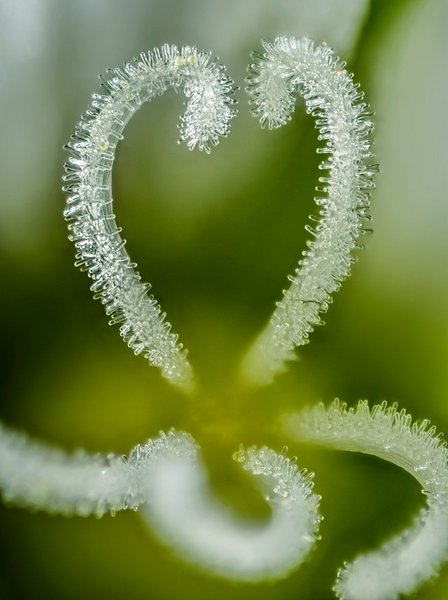
Photo: Jens H. Petersen
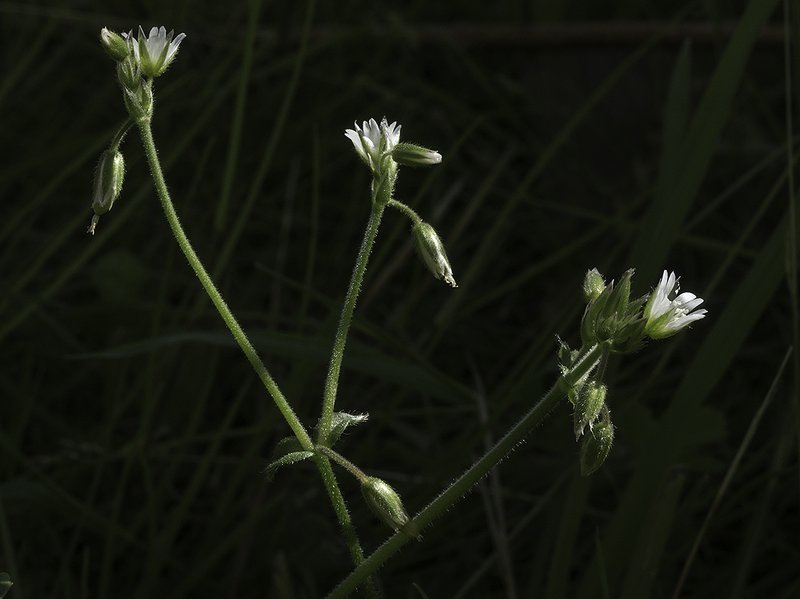
Photo: Jens H. Petersen
Mouse-ear chickweed has the peculiar Danish name “chicken gut” or “chicken intestine”. This is because if you gently pull the stem, the outer layer will crack, while the inner part (the vascular tissue) is drawn out as a tenacious elastic string, which, if you stretch your imagination, may resemble an intestine of a chicken.
At first glance, the flowers are inconspicuous, but if you get really close, possibly with a magnifying glass, it has the finest small flowers with five white, deeply cleft petals, ten stamens and five styles. If you look from the right angle, the styles may form the most beautiful heart.
Mouse-ear chickweed grows along roads, on meadows, grassland and farm land. If you look in your garden, there is a good chance of finding it there too.
Facts:
- Greenhouse location: The exhibition “Fabulous Flowers”
- Danish name: Almindelig hønsetarm
- Latin name: Cerastium fontanum
- Family: The carnation family / Caryophyllaceae
- Natural habitat: Along roads, on meadows, grassland and farm land.