Common bluebell
In spring in England, the forest floor can be completely carpeted with flowering bluebells.

Close-up of a stamen opening and revealing the elongated green pollen grain.
Photo: Jens H. Petersen
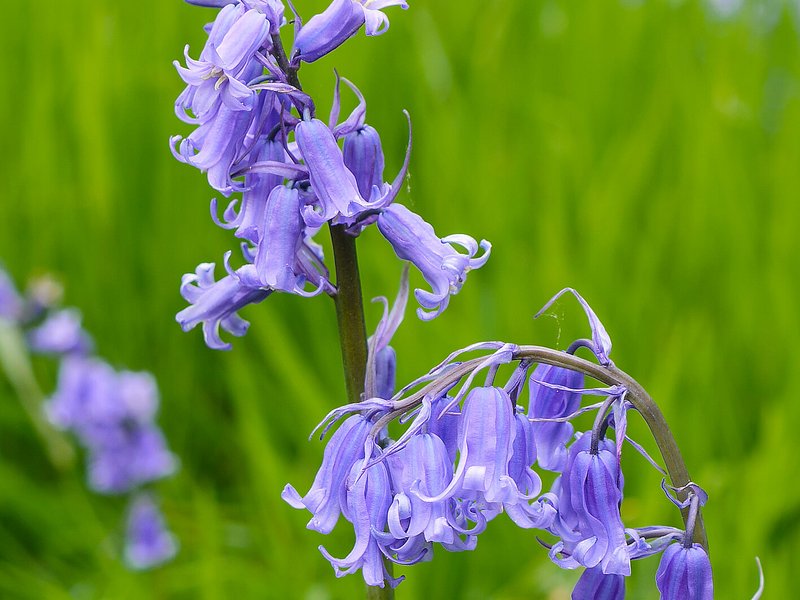
Photo: Jens H. Petersen
Common bluebell is native to western Europe and almost half the population grows in the UK. In some places in the UK, the entire forest floor is covered with blooming bluebell in the spring. This is an amazing sight and a popular tourist attraction.
In the Royal Botanical Gardens in Kew, near London, the scientists have recorded the first flowering date of the common bluebells every year for the last 50 years. The dates when the first flowers open varies from year to year, but overall, the average opening dates have advanced by as much as two weeks over the last 30 years.
This corresponds to the period where the human-caused climate changes have accelerated. Thus it seems that spring is getting earlier and earlier.
Facts:
- Greenhouse location: The exhibition “Fabulous Flowers”
- Danish name: Almindelig klokke-skilla
- Latin name: Hyacinthoides non-scripta
- Family: The hyacinth family / Hyacinthaceae
- Natural habitat: Grown in gardens and can be found naturalised near buildings