Asterogyne

© Egon Krogsgaard
© Egon Krogsgaard
Asterogyne is characterised by having undivided leaves, which is unusual among understory palms in the tropical rainforest. It occurs in rainforests along the Pacific coast of South America, from Central America to Ecuador, where it often forms large stands.
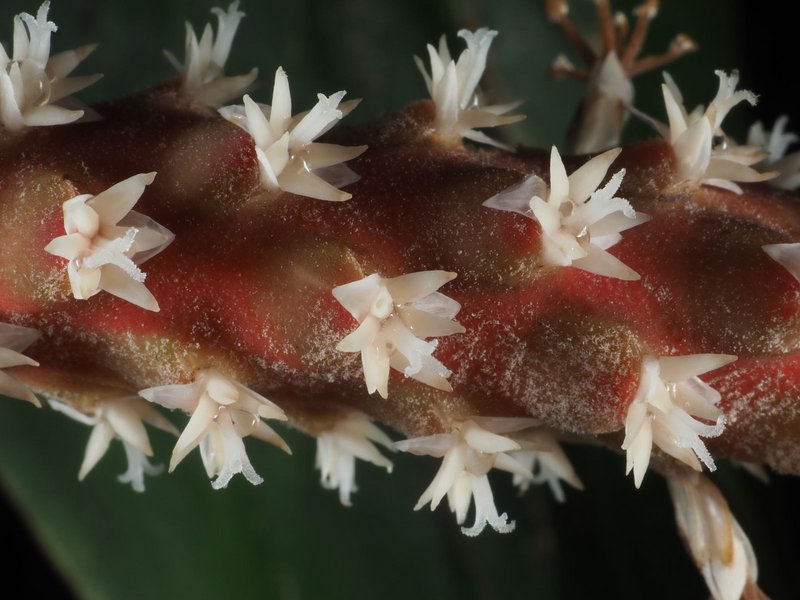
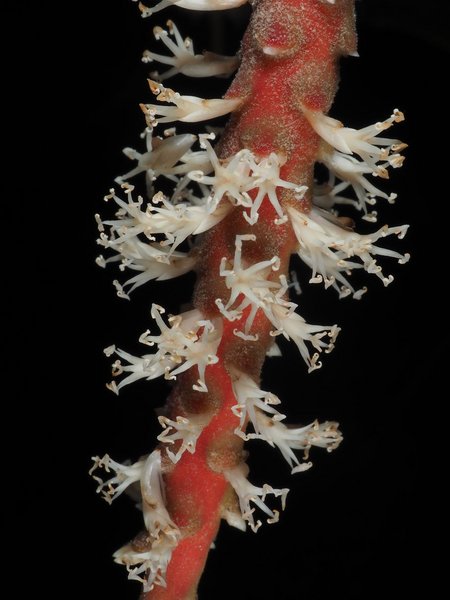
The flowers are set sunken into small pits in the branches of the inflorescence. Each pit contains two male flowers and one female flower. The male flowers open first. Only after all the male flowers have fallen does the female flower open. In this way, the palm avoids self‑pollination.
The scientific name Asterogyne is composed of “aster”, meaning star, and “gyne”, meaning woman or female organ. The palm was given this name because the parts of the female flower — the carpels and stigmas — are arranged in such a way that they resemble small stars when the flower is viewed from above.
Facts:
- Greenhouse location: Tropical house
- Danish name: Hunstjernepalme
- Latin name: Asterogyne martiana
- Family: Palm family / Arecaceae
- Natural habitat: Northwestern part of South America
Learn more about other plants here.