Field scabiosa
A valuable pollen and nectar source attracting moths, butterflies, and bees.

Photo: Jens H. Petersen
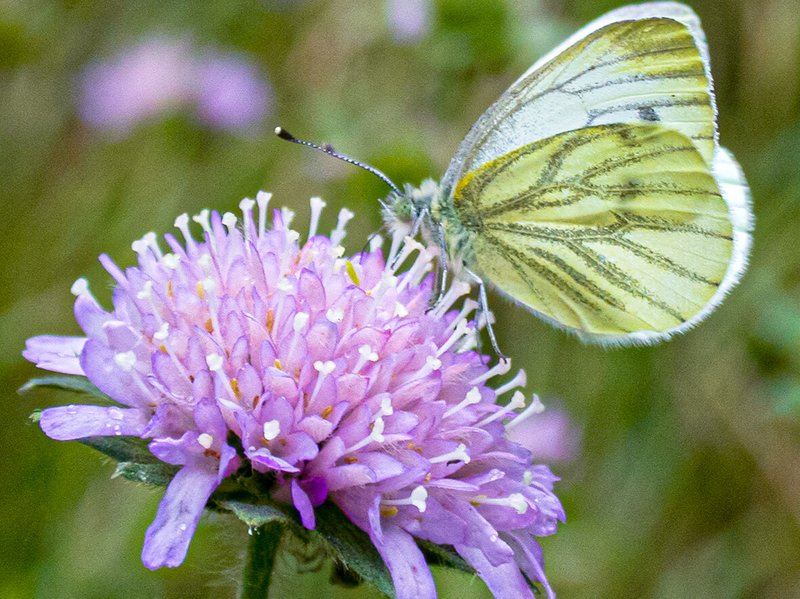
Photo: Jens H. Petersen
Field scabiosa flowers produce large amounts of nectar and pollen attracting many different pollinating insects.
Most insects collect pollen from several different plants, but the Large Scabious Mining Bee (Andrena hattorfiana), relies heavily on field scabiosa because its larvae almost exclusively feed on pollen and nectar from its flowers – and a lot of flowers are needed.
The Large Scabious Mining Bee is one of our largest solitary bees. It digs passages and makes nests in the ground where it lays eggs and raises its larvae.
The Large Scabious Mining Bee needs around 300,000 pollen grains to raise a single larva. This means, that the bee for each single larva must empty about 12 flower heads for pollen. Under favorable conditions i.e. nice weather and plenty of flowers, one single female bee may produce up to 18 larvae.
This restricted nutrition source obviously means that the bee able to live only in areas with large populations of field scabiosa.
Facts:
- Greenhouse location: The exhibition “Fabulous Flowers”
- Danish name: Blåhat
- Latin name: Knautia arvensis
- Family: The honeysuckle family / Caprifoliaceae
- Natural habitat: Meadows, grassland, steep slopes and along roads.