Bloody cranesbill
Bloody cranesbill is indispensable to the butterfly Northern brown argus, whose larvae feed on the plant.

Photo: Jens H. Petersen
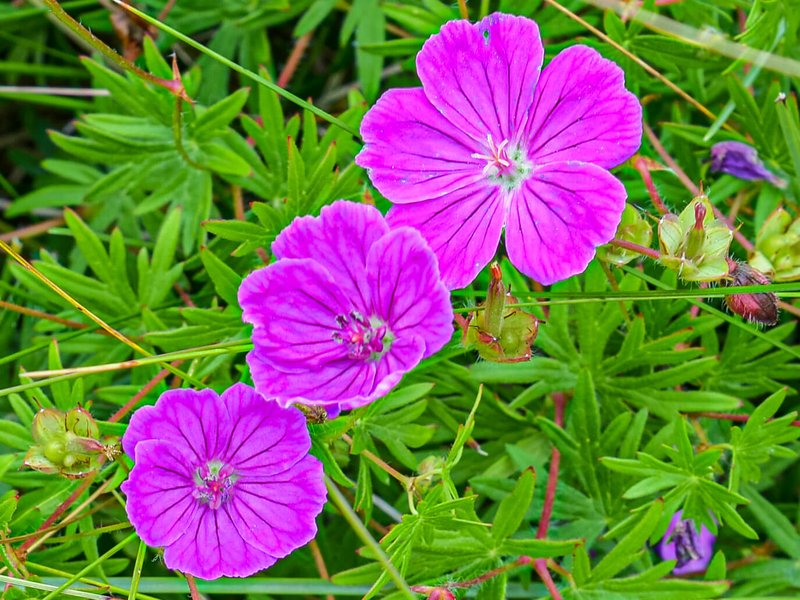
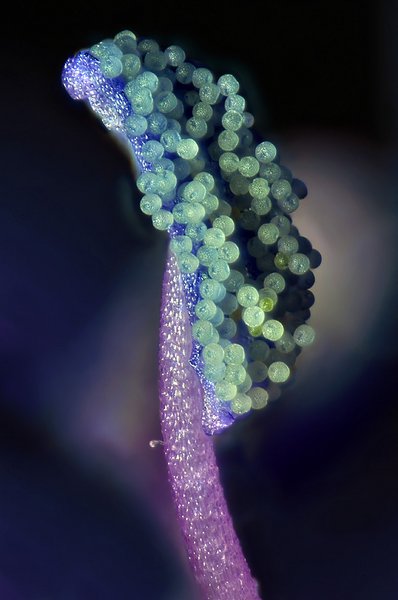
Photo Jens H. Petersen
Bloody cranesbill has large eye-catching purple flowers. However the name of the plant is not due to the colour of the flowers but the colour of the dying leaves in autumn.
Like the other species of cranesbill, it has very large pollen grains; so large that you can see them with the naked eye.
The plant attracts many different insects that feed on nectar and pollen and at the same time pollinate the flowers. Bloody cranesbill is vital to the butterfly northern brown argus (Aricia artaxerxes), because it is the only plant its larvae are able to feed on.
In Denmark Northern Brown Argus is found only in few places in Tannis Bugt in Northern Jutland, where large populations of bloody cranesbill grow in the dunes. Northern Brown Argus is listed as critically endangered in Denmark
Facts:
- Greenhouse location: The exhibition “Fabulous Flowers”
- Danish name: Blodrød storkenæb
- Latin name: Geranium sanguineum
- Family: The geranium family / Geraniaceae
- Natural habitat: Scattered on calcareous, dry, open areas and on steep slopes.