Fishtail palm

© Egon Krogsgaard
©Egon Krogsgaard
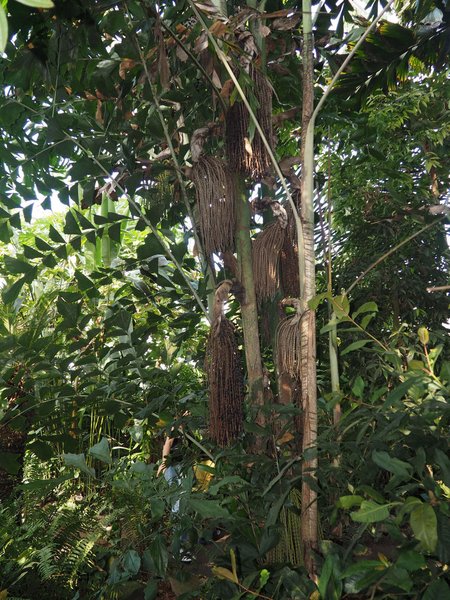
The fishtail palm is so named is named like this because of its fishtail-shaped leaflets.
The clustering fishtail palm branches from the ground and, with time, develops a cluster of stems. Each stem flowers only once. Flowering starts at the top and continues downwards until the last inflorescence is formed just above ground level.
When the fruits are ripe, all the energy in the stem has been used up, and it dies. The palm itself lives on and grows new stems.
In Asia, the clustering fishtail palm has many uses. The heart of the palm, i.e. the growing bud of the palm, is edible. It is also possible to tap the juice of the palm by cutting off the inflorescence. The juice is used in sugar production or wine making.
The trunks can be used for house building, and the leaves can be used in roofing. Even the fibres from the leaf stalk can be used for rope and brushes.
Facts:
- Greenhouse location: Tropical house
- Danish name: Fiskehalepalme
- Latin name: Caryota mitis
- Family: Palm family / Arecaceae
- Natural habitat: Southeast Asia
Learn more about other plants here.