Ground-ivy
Some of the flowers are hermaphroditic and have anthers that form a cross.

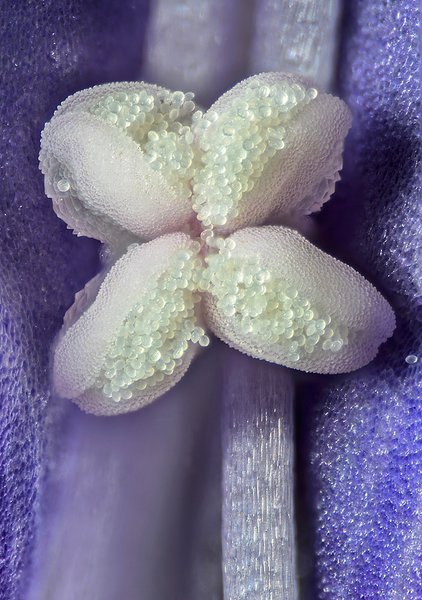
Photo: Jens H. Petersen
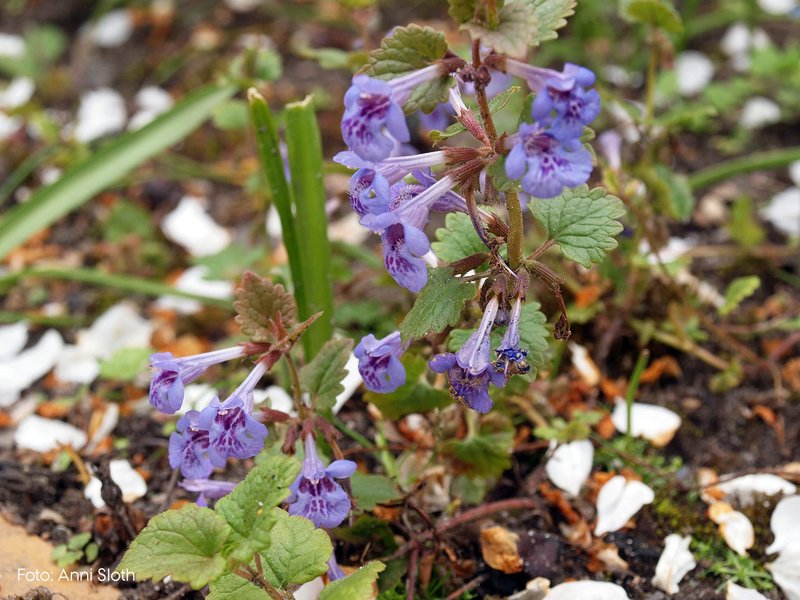
Photo: Anni Sloth
Individual plants of ground-ivy (Glechoma hederacea) are different. Some plants have hermaphroditic (bisexual) flowers, i.e. flowers that have both stamens and ovary, other plants have female flowers only, i.e. flowers without stamens.
The anthers of the hermaphroditic flowers look like a distinct cross, which has given the species the Danish name: “Cross anther”.
It is not known for sure, but it is suggested that the hermaphroditic flowers are able to self-pollinate. The female flowers, on the other hand, need cross-pollination in order to produce seeds - in this way genetic variation is promoted.
Ground-ivy is an ancient medical plant; the leaves were placed on wounds and abscesses to heal these.
Facts:
- Greenhouse location: The exhibition “Fabulous Flowers”
- Danish name: Korsknap
- Latin name: Glechoma hederacea
- Family: The mint family / Lamiaceae
- Natural habitat: Meadows and roadsides