Common bugloss
The entrance of the flower is densely hairy, so only certain insects can gain access to its nectar — and thereby pollinate it.

Photo: Jens H. Petersen
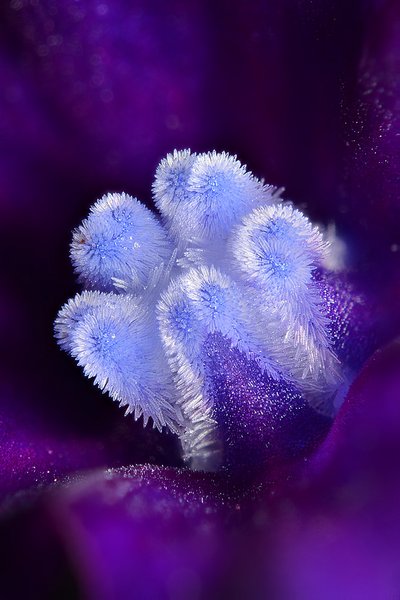
Photo: Jens H. Petersen
Common bugloss’s flowers are heavily blue-violet. The entrance to the flower and to the nectar is closed by fair velvet hairs.
The flowers are pollinated by butterflies and bumble bees with long probosces, able to reach the nectar at the bottom of the flowers. The flowers are constructed so the insects are forced to pollinate the flower in order to reach the nectar.
The dense hairs at the entrance to the flowers prevent the access of nectar thieves, i.e. insects that want nectar, but are unable to pollinate.
Common bugloss belongs to the borage family, and like most of the plants of this family the entire plant is covered with more or less stiff hairs.
In Danish the plant is called “ox tongue”, because the rough leaves remind of the rough tongue of a cow or an ox.
In the middle ages, the plant was used as a medicine for melancholy, lung diseases and as a heart tonic. Today, it is not used medically.
Facts:
- Greenhouse location: The exhibition “Fabulous Flowers”
- Danish name: Læge-oksetunge
- Latin name: Anchusa officinalis
- Family: The borage family / Boraginaceae
- Natural habitat: Along roads, on slopes and sandy fields