Musk mallow
The plant's flowers produce both nectar and pollen in large quantities, which attracts many insects.

Photo: Jens H. Petersen
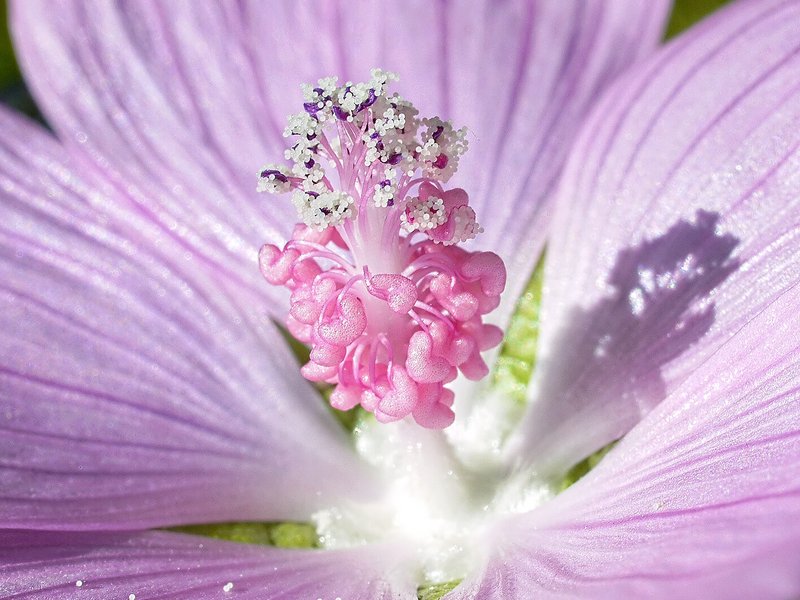
Photo: Jens H. Petersen
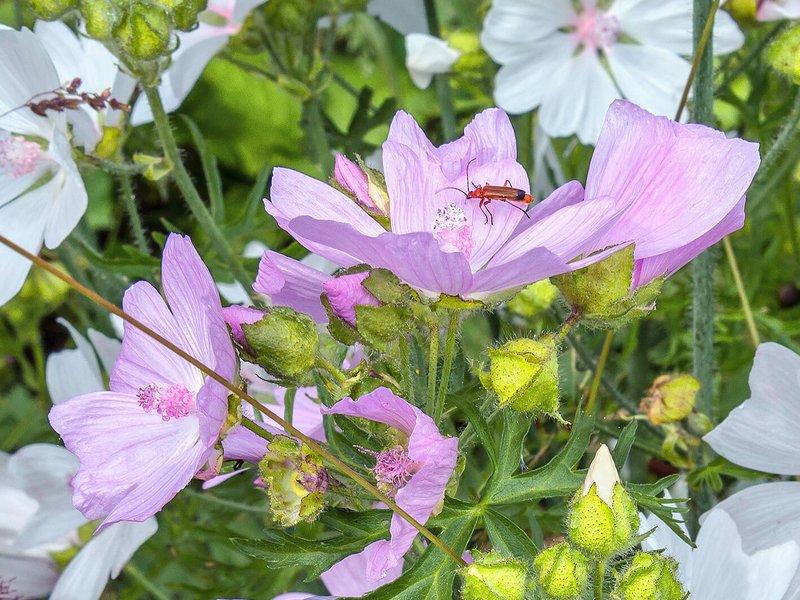
Photo: Jens H. Petersen
Musk mallow is available in many garden centers. It has elegant, silky pink or white flowers that light up in the garden throughout the month of October when most other plants are faded.
Musk mallow produces large quantities of both nectar and pollen and attracts many insects. Therefore, musk mallow is useful in garden or flower meadows, attracting pollinating insects.
In addition, both seeds, flowers and leaves are edible and can be used i.e. in salads or as a herbal tea.
Musk mallow originates from the Middle East, Caucasus and the southern and southeastern Europe. It has migrated to Denmark and grows on road slopes and near houses.
Facts:
- Greenhouse location: The exhibition “Fabulous Flowers”
- Danish name: Moskus-katost
- Latin name: Malva moschata
- Family: The mallow family / Malvaceae
- Natural habitat: Road slopes, gravel pits and near houses