Poinsettia
A colourful Christmas classic with roots in Mexico.

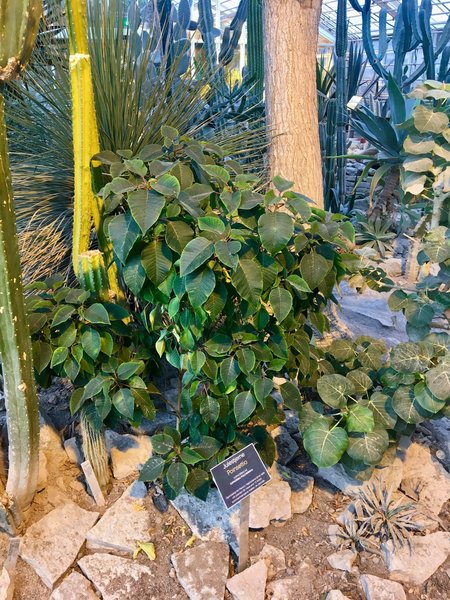
The poinsettia originates from Mexico and Central America, where it grows naturally as a shrub 3–5 metres tall. What at first glance appear to be large red flowers are in fact bracts – modified leaves that surround the small yellow-green flowers in the centre.
The poinsettia is widely cultivated as an ornamental plants, primarily because of its colourful bracts, and has become a central part of the Christmas industry in many countries. Today, it is one of the best-selling ornamental plant in December – especially in the United States and Europe.
The poinsettia’s history as a Christmas plant dates back to the 16th century in Mexico, where it was used in church processions by Franciscan monks. In Mexico, it is known as La Flor de Nochebuena – “the Christmas Eve flower”.
According to a legend, a poor girl was on her way to church. She was so poor that she could not bring a gift for Jesus on his birthday, which naturally made her very sad. Inspired by an angel, she picked wildflowers from the roadside and offered them as a gift. When she placed them at the altar, they burst into beautiful red flowers – poinsettias. The star-shaped red bracts symbolise the Star of Bethlehem, and the red colour is interpreted as a symbol of the blood of Jesus.
The poinsettia is a short-day plant, meaning that it requires at least 12–14 hours of darkness per day in order to develop its red bracts. If it is exposed to too much light, the leaves will remain green.
Poinsettias are most commonly propagated by cuttings, which are typically taken after flowering to produce compact plants suitable for indoor use.
When buying a poinsettia, it is important to check that the small flowers in the centre of the red “star” have not yet opened, as this ensures that the poinsettia will last longer.
Facts:
- Greenhouse location: The Dessert House
- Danish name: Julestjerne
- Latin name: Euphorbia pulcherrima
- Family: Spurge family / Euphorbiaceae
- Natural habitat: Mexico and Central America