Queen sago

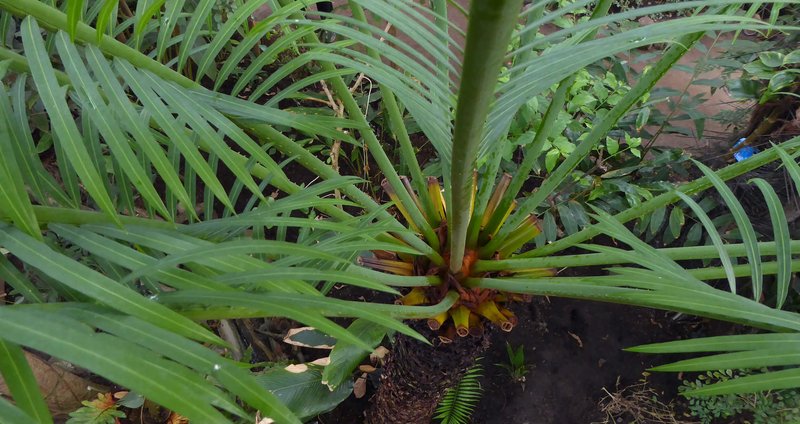
Queen sago is only found in a limited area of southern India. It is registred as 'endangered' on the international list of threatened species. This is because half of the forests where it grows have been cleared within the last 60 years, and the deforestation seem to continue.
The queen sago is so named is called so because the pith of the stem is rich in starch and is used locally to make sago. The harvesting is destructive, as the plant must be cut down in order to make the sago. This, together with the collection and sale of leaves at the local flower markets, contributes to the scarcity of the species in the wild.
The Queen sago superficially resembles a palm tree but is more closely related to the conifers, podocarps and ginkgo trees. Queen sago have no flowers, it belongs to the group of plants called gymnosperms, which means "naked seeds" because the seeds are not surrounded by a protective fruit wall, which is the case of the seeds of the angiosperms or flower plants; the group of plants that palm trees belongs to.
Facts:
- Greenhouse location: Tropical house
- Danish name: Sago-koglepalme
- Latin name: Cycas circinalis
- Family: The cycad family / Cycadaceae
- Natural habitat: Soutern India