Common columbine
Originally brought here from Southern Europe by monks and cultivated as a medicinal plant.

Photo: Anni Sloth
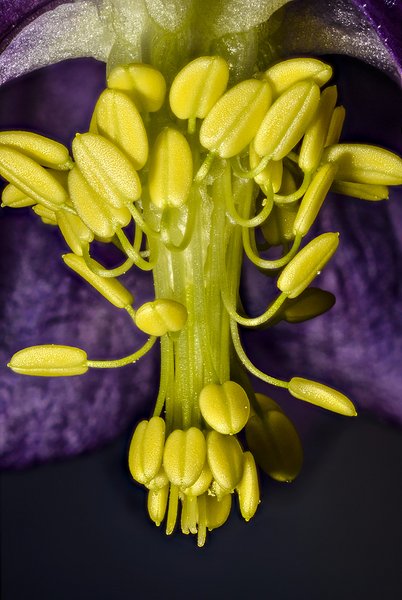
Photo: Jens H. Petersen
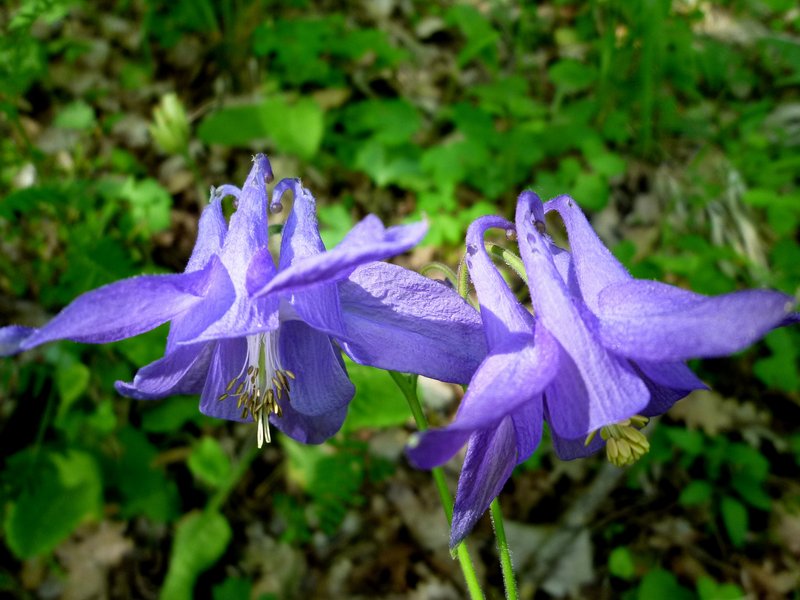
The petals have long outgrowths called spurs that contain nectar.
The nectar attracts butterflies and bumble bees with long proboscis, able to reach all the way up to the tip of the spurs to the nectar.
While the insects drink the sweet nectar, they become covered with pollen, then taking it along to the next flower on their way.
Columbine was introduced from southern Europe in the Middle Ages. It was grown in monastery gardens and used as a medicinal plant against i.a. abscesses, rash, sore throat and arthritis.
The plant is slightly poisonous and is no longer used as a medicinal plant.
Facts:
- Greenhouse location: The exhibition “Fabulous Flowers”
- Danish name: Almindelig akeleje
- Latin name: Aquilegia vulgaris
- Family: The buttercup family / Ranunculaceae
- Natural habitat: Grown in gardens and naturalized