Aloe vera

Aloe vera is the best-known species of aloe. The species has been cultivated so far back in history that its original native range remained uncertain for a long time. Today, it is generally believed that Oman, on the Arabian Peninsula, is its natural place of origin.
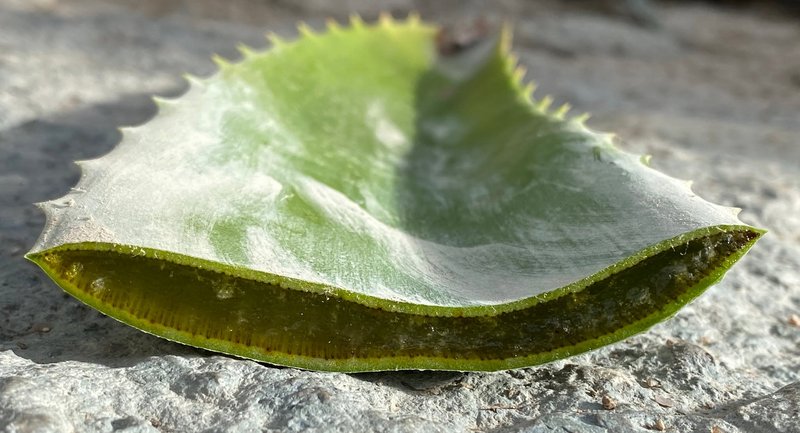
Inside the leaves of Aloe vera is a clear gel that has been used for various medicinal purposes for centuries. Today, Aloe vera is used in many products, including skin creams, shampoos, and other personal care products.
The genus Aloe comprises nearly 600 species. Its natural distribution includes Africa, Madagascar, and the Arabian Peninsula, but today aloes are cultivated in dry, warm regions throughout much of the world. Most species form rosettes of thick, succulent leaves. These leaves function as water reservoirs, allowing the plants to store water for dry periods. This adaptation helps them survive long periods without rainfall and makes aloes particularly well suited to arid environments.
At first glance, aloes may resemble agaves, but the two groups are not closely related. They look similar because they have independently evolved the same strategy for coping with drought. This phenomenon, in which different organisms develop similar adaptations because they live under similar environmental conditions, is known as convergent evolution.
Fact box:
- Greenhouse location: Dessert house
- Danish name: Læge-aloe
- Latin name: Aloe vera
- Family: Asphodel family / Asphodelaceae
- Natural habitat: Oman
Learn more about other plants here.