Pineapple

Indigenous peoples were already cultivating pineapples when Europeans arrived in South America.
When Columbus tasted pineapple on his second voyage to the Americas, he brought the fruit to Europe in 1493. It was highly prized, and in the 18th century pineapples began to be grown in greenhouses in Europe – among other places at Rosenborg Castle in Copenhagen.
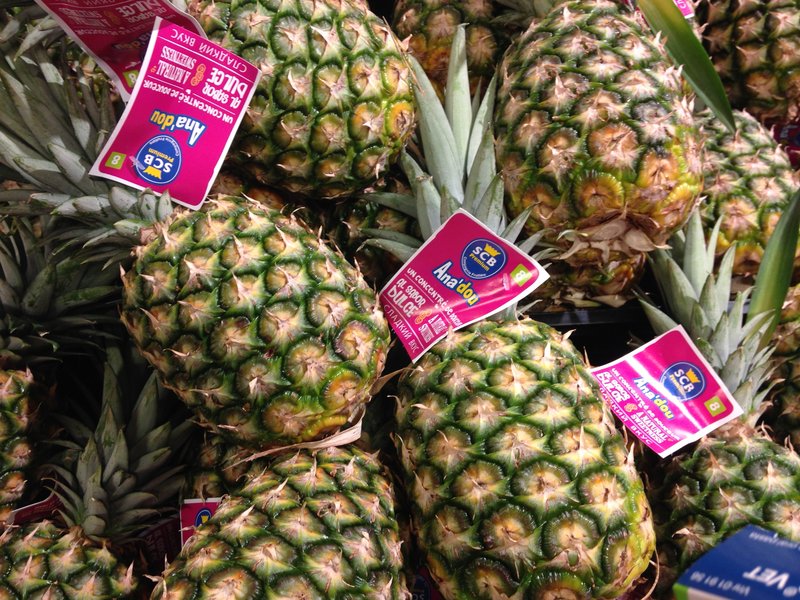
Have you ever wondered why a pineapple has such a distinctive pattern on its surface? This is because a pineapple is not actually a single fruit, but a shoot made up of many small berries that have grown together. Each of the small sections on the surface is a berry.
Pineapple contains the enzyme bromelain, which breaks down proteins. For this reason, pineapple can be used to tenderise tough meat, such as a steak. Bromelain is destroyed by heat, so if you want to tenderise meat, you must use fresh pineapple. Canned pineapple will not work, because it has been heated during processing.
Fact box:
- Greenhouse location: Not on display at the moment
- Danish name: Ananas
- Latin name: Ananas comosus
- Family: Ananasfamilien / Bromeliaceae
- Natural habitat: Brazil