Candelabra tree

Candelabra tree is east Africa’s answer to America’s cactus. It can grow 12 m in height and the green, swollen stems store large amounts of water, which the plant can consume during dry periods.
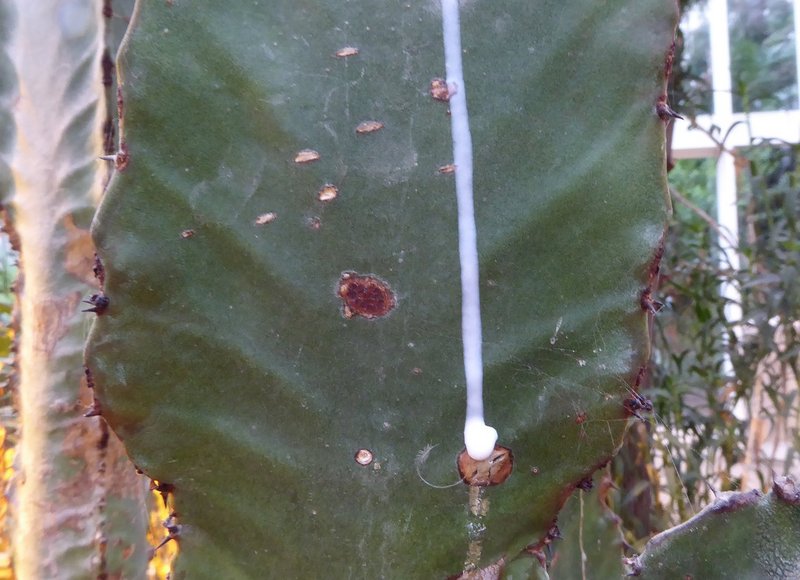
To protect themselves from beeing eaten by insects and other animals, the candelabra tree has an unpleasant surprise. If the plant is pierced, a sticky white sap comes out. The sap is toxic and can badly irritate the skin, eyes, and mucous membranes.
In Africa, this milky sap has been used to make poison for arrows, for fishing, and in traditional medicine, including the treatment of warts.
Learn more about cacti - including the difference between African and American cacti in the video clip below.
Fact box:
- Greenhouse location: The Dessert House
- Danish name: Kandelaber-vortemælk
- Latin name: Euphorbia candelabrum
- Family: Spurge family / Euphorbiaceae
- Natural habitat: Eastern Africa
Learn more about other plants here.