Cape aloe

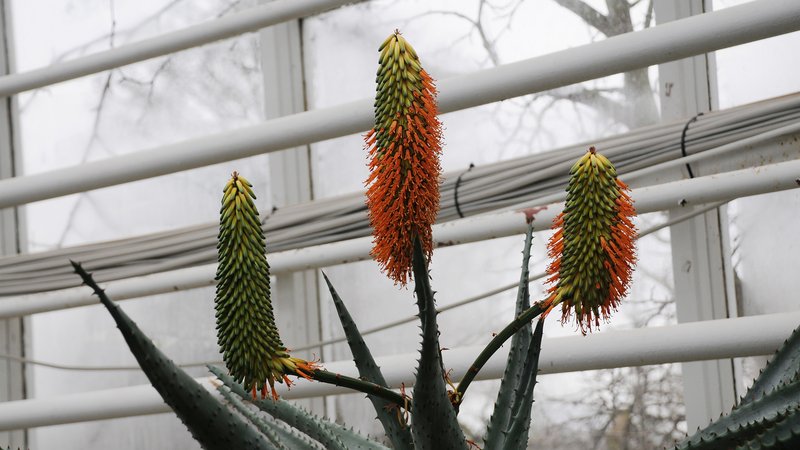
The Aloe Family
Cape aloe is one of about 500 species of aloe. They are especially common in South Africa. These are rosette plants with thick, water-filled leaves that are well adapted to growing in dry areas.
Cape Aloe and Its Properties
Cape aloe can form stems up to 3 meters tall. The leaves contain a gel-like tissue in the middle part, used similarly to Aloe vera for skin care and healing.
In addition, the leaves contain a strongly bitter brown sap, which in South African medicine is tapped and dried into a dark, shiny mass. It is used as a laxative and is extremely potent. Ingesting just half a gram leads to a complete evacuation of the intestines within 6–24 hours.
Aloe and Agave – Parallel Evolution on Different Continents
The aloe plant resembles an agave but belongs to a completely different family. While aloe originates from Africa, agave comes from the dry regions of the Americas. They look remarkably alike because, over time, they have adapted to the same type of environment - just on two different continents.
The same phenomenon also applies to the spurge and cactus families - and it is called convergent evolution.
Fact box:
- Greenhouse location: The Dessert House
- Danish name: Kap-aloe
- Latin name: Aloe ferox
- Family: Asphodel family / Asphodelaceae
- Natural habitat: South Afrika and Lesotho
- Learn more about other plants here.