Ceylon cinnamon

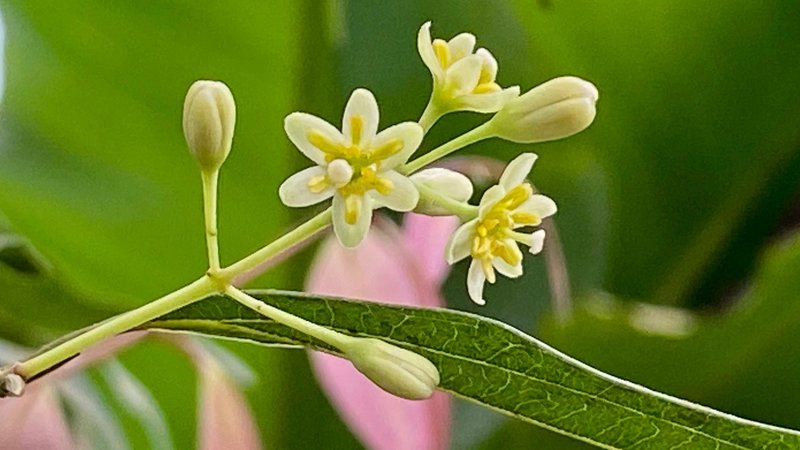
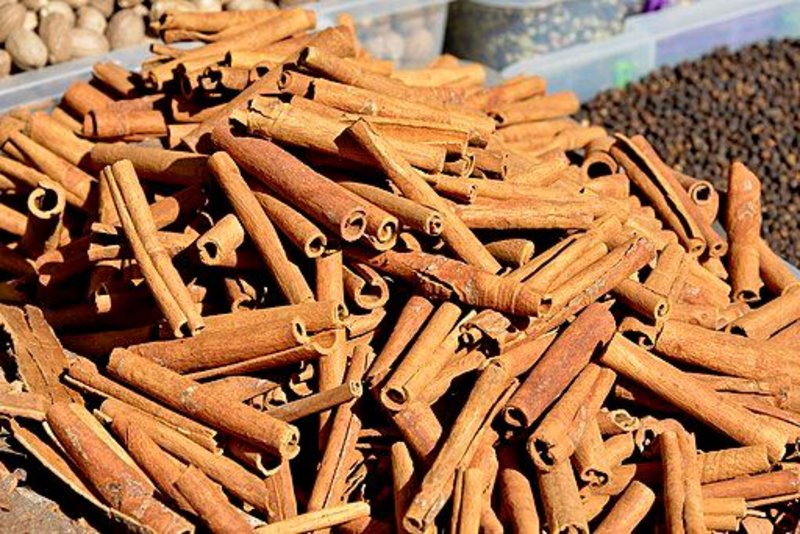
Ceylon cinnamon originates from Sri Lanka. In the past, cinnamon was a very costly spice and was regarded as a luxury commodity associated with wealth and refinement. It was partly the cinnamon trade that brought the Dutch to Sri Lanka, where they established a trading post as early as 1638.
Cinnamon is produced from the bark of the cinnamon tree. In the wild, the tree can grow to a height of 6–10 metres, but when cultivated for cinnamon production, the trunk is cut back to about 10–15 cm above the ground. The tree then produces new shoots from the stump, and it is these young shoots that are harvested for cinnamon. The bark is stripped from the branches, dried, and either sold as cinnamon sticks or ground into the cinnamon powder available in shops.
Two different types of cinnamon are commonly sold. The finest and most expensive type is true cinnamon, which is made from the bark of the Ceylon cinnamon tree (Cinnamomum verum), grown mainly in Sri Lanka and southern India.
If you want this type of cinnamon, make sure that the packaging states “true cinnamon” or Cinnamomum verum. If the label simply says “cinnamon,” it is most often cassia cinnamon. Cassia cinnamon comes from species such as Cinnamomum cassia, C. burmannii, and C. loureiroi, which are mainly cultivated in China, Vietnam, and Indonesia. Cassia cinnamon is less expensive than true cinnamon but has a stronger and less delicate flavour.
Cassia cinnamon also contains the compound coumarin, which can be harmful to the liver in large quantities. For this reason, regular consumption of large amounts of cassia cinnamon is not recommended. True cinnamon, by contrast, contains very little or no coumarin and is considered safer for normal consumption.
Facts:
- Greenhouse location: Tropical house
- Danish name: Ceylon-kanel
- Latin name: Cinnamomum verum
- Family: Laurel family / Lauraceae
- Natural habitat: Sri Lanka and Southern India