Date palm
One of the oldest cultivated crops in arid regions.

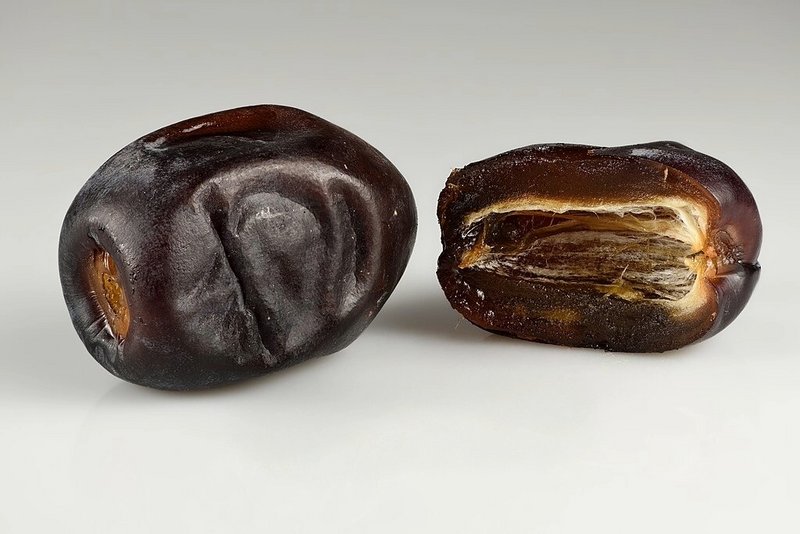
The date palm is believed to originate from areas around the mouths of the Euphrates and Tigris rivers – Mesopotamia – and is one of the oldest cultivated crops in arid regions of North Africa, the Middle East, and the Arabian Peninsula.
Archaeological finds show that dates have been cultivated in the Middle East for at least 5,000 years, and possibly as far back as 6,000 BCE. Dates are mentioned in the Bible, and palm branches from the date palm were used during Jesus’ entry into Jerusalem on Palm Sunday.
The date palm has played a major role for populations living in desert regions from North Africa to India. The sugar-rich fruit can be cultivated where few other plants thrive and is still a basic source of nutrition in many desert areas.
A single cluster of dates can contain more than 1,000 fruits, and one palm can produce up to 200 kg of fruit per year – in some cases as much as 700 kg under optimal conditions. Dried dates contain up to 70–80% sugar and have a long shelf life. All parts of the date palm are utilised: the trunk is used as building material, the leaves provide fibres for baskets and roofing, the sap can be used for syrup and fermented into wine, and not least the fruit is an important food source and export commodity.
Date palms are dioecious, meaning that individual plants are either female or male, and it is not possible to determine the sex of a plant before it flowers, which it does only when it is around 4–5 years old. Only female palms produce fruit (dates), but they require pollen from male palms in order to form dates. The optimal ratio is one male palm for every 50 female palms. To ensure the correct sex ratio, date palms are propagated vegetatively – that is, by offshoots – so that it is known whether a planted palm is male or female.
Facts:
- Greenhouse location: The Dessert House
- Danish name: Daddelpalme
- Latin name: Phoenix dactylifera
- Family: Palm family / Arecaceae
- Natural habitat: North Africa, the Middle East, and the Arabian Peninsula