European grape

![[Translate to English:] Unge grønne vindruer med støvdragere omkring](/fileadmin/_processed_/b/b/csm_Almindelig_vin_Egon_Krogsgaard_57f799739f.jpg "[Translate to English:]")
© Egon krogsgaard
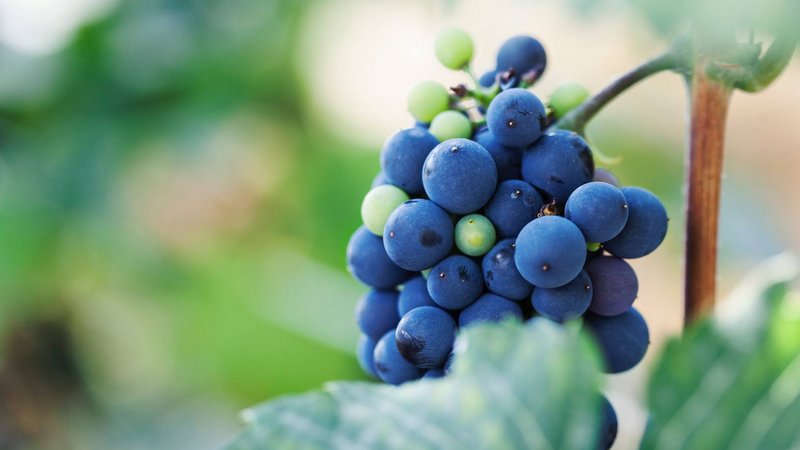
European grape (Vitis vinifera) has been domesticated and cultivated for thousands of years. In fact, it has been cultivated so far back in time that no one knows for sure where it came from.
Today approx. 85% of the world's production of grapes is used to make wine, while approx. 10% is used as fresh fruit and 5% is dried and sold as raisins.
In the mid1800s, European wine production was destroyed by the North American grape phylloxera (Phylloxera vastatrix). The grape phylloxera is an approx. 1 mm long, yellow sap sup-sucking aphid. It lays its eggs on the roots of the grapes.
The young phylloxera feeds on the roots, which become deformed and die. In the 1850s botanists collecting American vine species in America accidentally brought the grape phylloxera with them to England.
Here the phylloxera spread violently and quickly destroyed the English vineyards. In 1863 it was found in the Rhône district, and over the next 20-30 years, it spread throughout Europe. In France wine production went down by 75%.
The cure for the disease came from the same place as the problem. The grape phylloxera is not a problem in America because the roots of the American vine species exude a sticky sap, and they are therefore resistant to lice attacks. When this was discovered, the traditional European grape varieties were grafted on resistant American rootstocks, which solved the problem.
Facts:
- Greenhouse location: Mediterranean House
- Danish name: Almindelig vin
- Latin name: Vitis vinifera
- Family: Wild grape family / Vitaceae
- Natural habitat: The Mediterranean region, Central Europe and Southwest Asia