Coconut palm

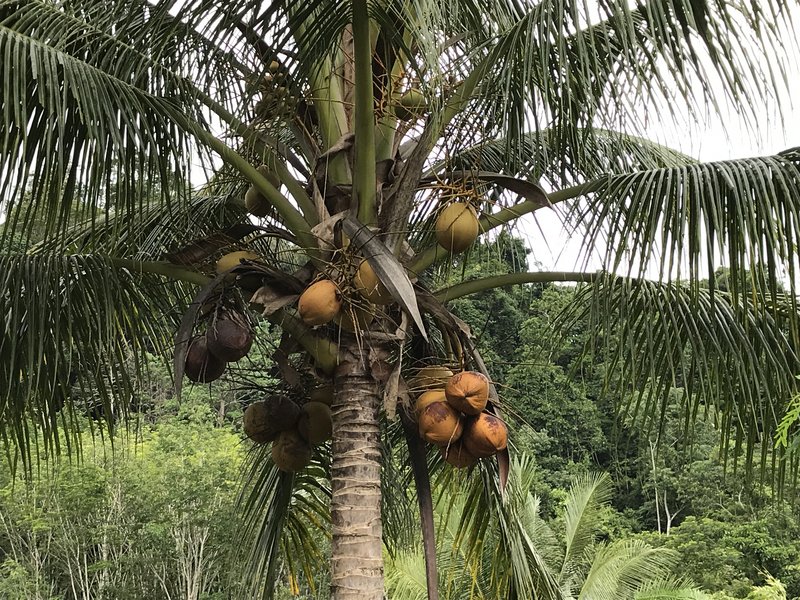
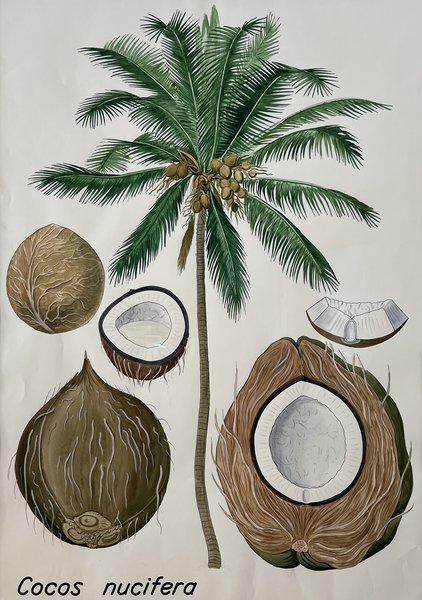
The coconut palm is a very ancient cultivated plant with countless uses. The coconut, which botanically is the seed of the palm, can be eaten and used to produce oil and animal feed. The hard shell of the seed is brown and can be polished and used to make jewellery and tools. The fibrous layer surrounding the seed is used to produce mats, carpets, woven items and rope, and the trunks of the palm are also used as timber.
Inside the coconut are both coconut water and coconut flesh. Coconut water is the clear, slightly sweet liquid found in young, green coconuts and is drinkable. It serves as nourishment for the seed and is naturally rich in minerals such as potassium. As the coconut matures, the coconut water is gradually used to form the firm, white flesh.
Coconut flesh is energy-rich and contains fat, dietary fibre and minerals. It can be eaten fresh, dried into desiccated coconut, pressed to make coconut milk, or used to produce coconut oil.
Coconut palms have been cultivated far back in time in both Southeast Asia and tropical parts of the Americas. Today, there are no documented wild-growing coconut palms, and the original place of origin of the palm is not known with certainty. However, it is likely that its origin was near coastlines, as coconuts can float for long periods in seawater and are therefore easily dispersed along tropical shores.
Fact box:
- Greenhouse location: Tropical house
- Danish name: Kokospalme
- Latin name: Cocos nucifera
- Family: Palm family / Arecaceae
- Natural habitat: Tropics