Cork oak

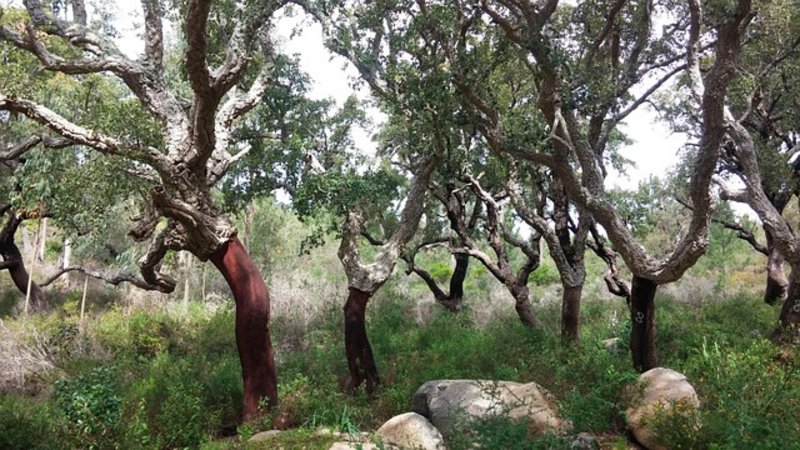

Cork oak (Quercus suber) is native to the western Mediterranean region, including Spain and southern France.
The cork oak is remarkable for its thick bark, known as cork. This cork layer protects the tree from heat and fire, making it particularly resistant to wildfires. Cork is a poor conductor of heat and acts like an insulating jacket around the trunk, shielding the living tissues from the extreme temperatures generated during a fire. As a result, cork oaks can often survive wildfires that would kill many other tree species.
Wildfires occur regularly throughout the Mediterranean region. A cork oak can live for up to 250 years, meaning that during its long lifetime it may experience several fires. The fire-resistant bark is therefore crucial to the tree's survival.
Did You Know?
The cork oak is the only tree from which bark can be harvested repeatedly without harming or felling the tree. After harvesting, the tree slowly produces a new layer of cork, which can be harvested again after several years.
The bark is first harvested when the tree is about 25 years old. Thereafter, cork can typically be harvested every nine years.