Common dandelion
The dandelion reproduces by cloning - not by pollination. And it does it quite effectively!

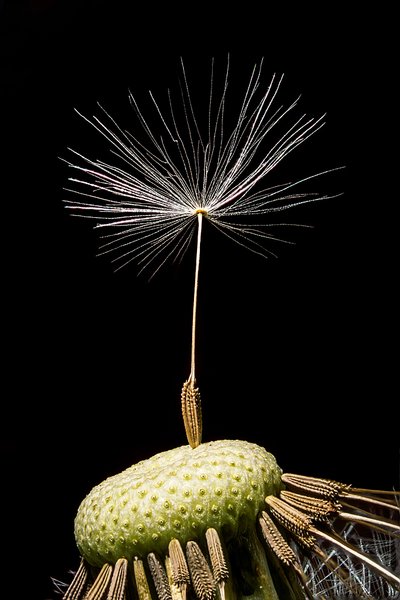
Photo: Jens H. Petersen
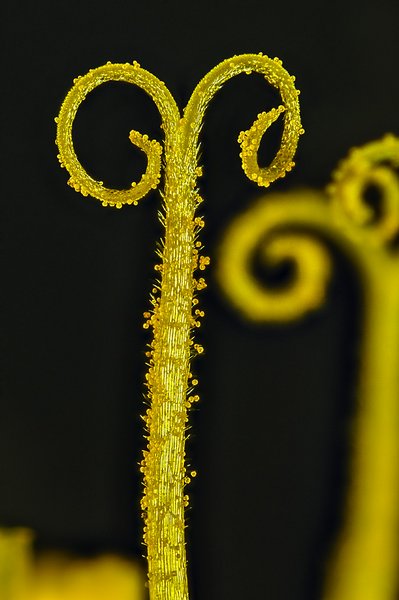
Photo Jens H. Petersen
What we normally perceive as the flowers on the dandelion (Taraxacum officinale) is actually a “basket” of many hundreds of identical small flowers.
Dandelions are special because they reproduce very efficiently without pollination and fertilization of the seeds.
Due to chromosome conditions, they cannot form gametes. In turn, they form a small bulbil inside each ovary, and each of the small fruits are able to germinate and are exact copies of the plant they come from.
The ripe fruits hang under a parachute made of fine hairs which enable them to be carried very efficiently by the wind.
Due to occasional genetic mutations in the bulbils, plants with altered characteristics and appearance may be formed if the mutations are viable. Therefore, several hundred different forms of dandelion have been registered in Denmark - and described as different species.
Facts:
- Greenhouse location: The exhibition “Fabulous Flowers”
- Danish name: Almindelig mælkebøtte
- Latin name: Taraxacum officinale
- Family: The daisy family / Asteraceae
- Natural habitat: Common throughout the country