Moringa

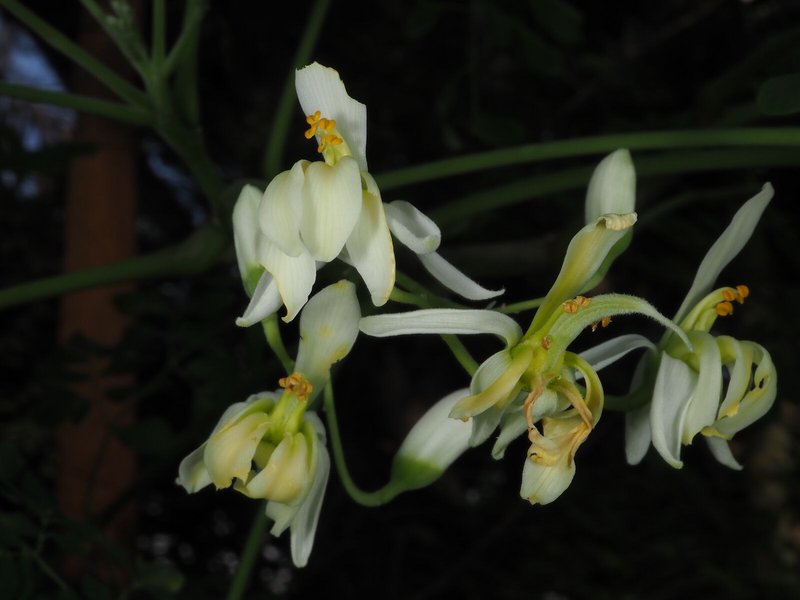
© Egon Krogsgaard
Moringa is a deciduous, fast‑growing tree that can reach about 10 meters in height. In many places it is called the “miracle tree”, because almost every part of the tree is edible.
The unripe, green seed pods can be eaten in much the same way as green beans. The seeds from more mature pods can be boiled and eaten like peas.
The leaves are rich in vitamins and minerals, and in some places they are sold as a dietary supplement. They can be boiled and used like spinach, or dried, powdered, and used as a spice or added to food.
The ripe seeds can be pressed to produce an oil known as ben oil, which is similar to olive oil. The seed cake – what remains after the oil has been pressed out – can be used as fertilizer or soil conditioner.
Because of its many uses and its high nutritional value, the moringa tree is often promoted as a plant that may help alleviate malnutrition in poor tropical and subtropical countries.
Facts:
- Greenhouse location: Tropical house
- Danish name: Moringa
- Latin name: Moringa oleifera
- Family: The moringa family / Moringaceae
- Natural habitat: India
Learn more about other plants here.