Saint Helena ebony

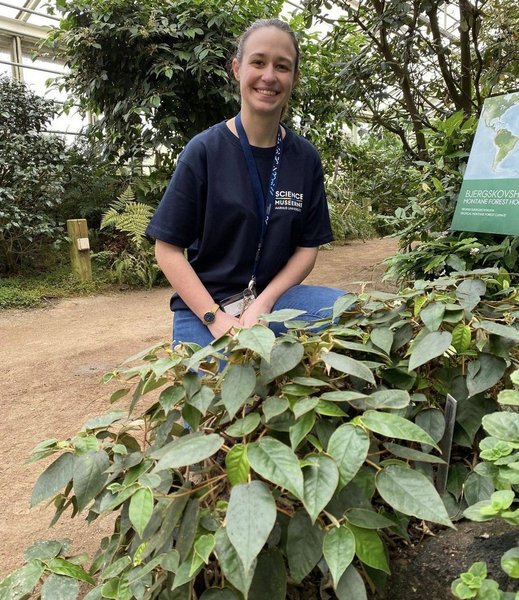
Saint Helena ebony (Trochetiopsis ebenus) is an example of a plant species with a very limited distribution that is now almost extinct in the wild.
It is native to the island of Saint Helena, located far out in the Atlantic Ocean west of Africa. When European sailors discovered the island in the 1500s, it was covered with large forests composed of tree species found nowhere else on Earth. One of these was the Saint Helena ebony.
The sailors released goats onto the island to provide a supply of meat for future visits. The goats caused extensive damage to the vegetation, and over the course of a few centuries, the island was transformed into a largely barren and rocky landscape.
Today, parts of the interior of Saint Helena are once again forested due to a major reforestation project initiated around the turn of the millennium. However, most of the trees in these new forests are introduced species from other parts of the world.
Only a very small number of Saint Helena ebony plants survive today. They are confined to a single area of no more than 100 m². For this reason, the species is classified as Critically Endangered on the IUCN Red List.
Saint Helena ebony is now cultivated more widely on the island and is also grown in a small number of botanical gardens. In greenhouses, the plant is propagated by cuttings, and in this way efforts are being made to support the survival of the species.
Facts:
- Greenhouse location: The tropical house
- Danish name: Sankt Helena ibenholt
- Latin name: Trochetiopsis ebenus
- Family: Mallow family / Malvaceae
- Natural habitat: The island Santa Helena
Learn more about other plants here.