Common nettle
The nettle is covered with small hairs that break on contact and inject a stinging liquid into the skin.

Photo: Jens H. Petersen
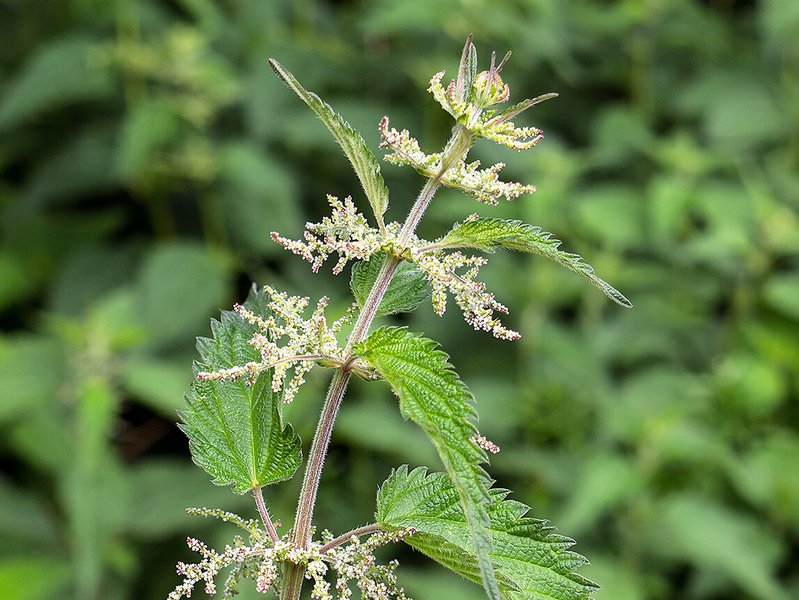
Photo: Jens H. Petersen
Leaves and stems of common nettle have lots of hairs that are built almost like syringes for injection, and that is how they function.
If you touch a nettle, the tip of the hairs breaks off and the sharp tip pierces the skin and injects the liquid, formic acid. It feels like being burned or bitten by an ant. It deters many animals from eating the plant, and this is why some people call it stinging nettle.
The butterfly Small Tortoiseshell (Aglais urticae) lays eggs on the lower side of nettle leaves, and when the eggs hatch, the larvae feed on the leaves. The larvae may feed on different species of nettle, but they prefer common nettle.
Facts:
- Greenhouse location: The exhibition “Fabulous Flowers”
- Danish name: Stor nælde
- Latin name: Urtica dioica
- Family: The nettle family / Urticaceae
- Natural habitat: On nutrient-rich soils, common near buildings