Sugarcane

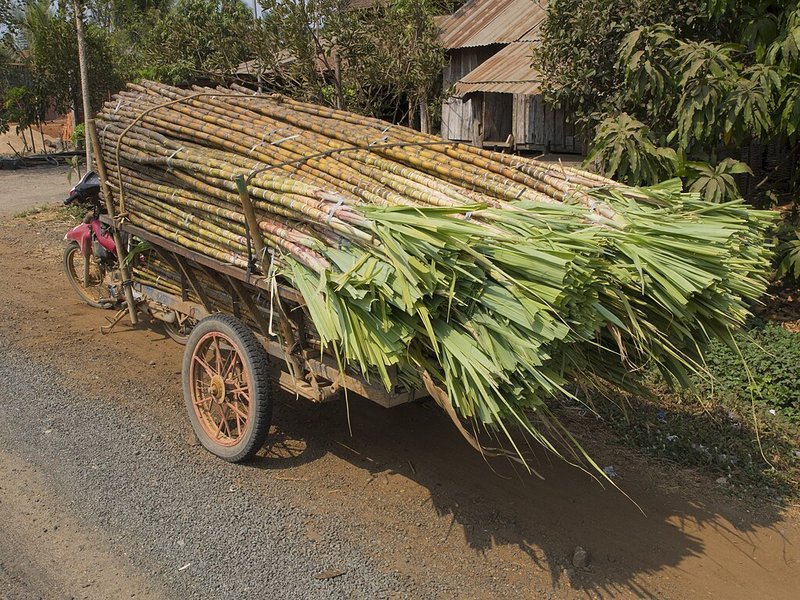
Origin and cultivation
Sugarcane originates from Southeast Asia and is now cultivated in tropical and subtropical regions worldwide where there is sufficient water.
Sugarcane accounts for about 70% of global sugar production. It is one of the crops that yields the highest amount of calories per unit of cultivated area.
Sugar production
After harvesting, the leaves are removed and the sugary juice is extracted from the stalks. The juice is then clarified and boiled down into a thick syrup.
As the syrup is concentrated, sugar crystals begin to form, producing raw (brown) cane sugar. Molasses is the remaining dark, viscous liquid after the sugar crystals have been separated.
If cane sugar is white, it has been refined, meaning that most impurities and non-sugar components have been removed, leaving nearly pure sucrose.
Fact box:
- Greenhouse location: Not on display at the moment
- Danish name: Sukkerrør
- Latin name: Saccharum officinarum
- Family: Grass family / Poaceae
- Natural habitat: Southeast Asia