Citron

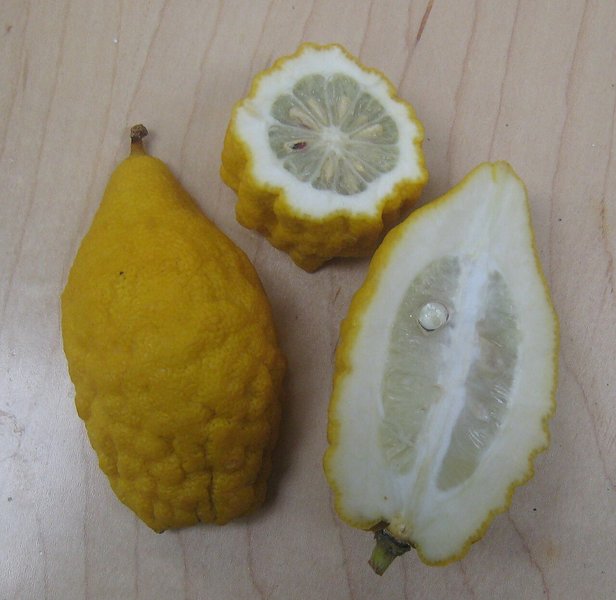
Citron (Citrus medica) is one of the oldest citrus species in the world and is believed to have originated in the regions at the foothills of the Himalayan Mountains.
The fruit is large, fragrant, and has a thick, rough rind. It resembles a lemon but is much larger. Unlike lemons and oranges, citron contains very little pulp and juice. Instead, its thick rind is highly aromatic. In Denmark, citron is best known as succade (sukat), a candied citron peel commonly used in Christmas cakes and other baked goods.
Research on plant genetics has shown that most citrus fruits originate from a small number of ancestral species. Oranges, lemons, and limes arose through crossbreeding between species such as citron, pomelo, mandarin, and kumquat. For this reason, they are known as hybrids.
Citron is considered one of the most important ancestral citrus species. Without it, many of the citrus fruits we find in supermarkets today would probably not exist.
Facts:
- Greenhouse location: The Mountain Forest House
- Danish name: Citron
- Latin name: Citrus medica
- Family: Rue family / Rutaceae
- Natural habitat: Himalayan foodhills