Chilli pepper

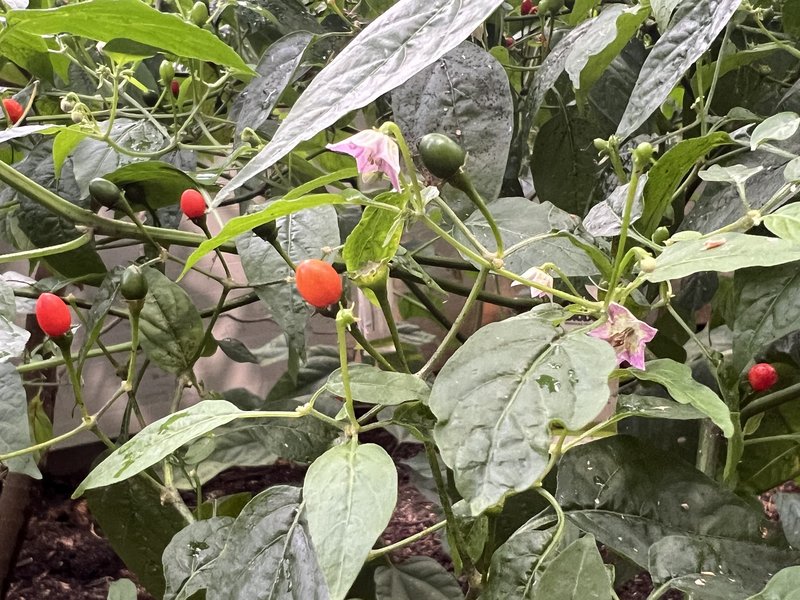
Chilli pepper (Capsicum) originated in Central and South America and has been used by Indigenous peoples for thousands of years, not only as a spice but also as a medicine and even as an aphrodisiac.
The compound capsaicin is responsible for the intense burning sensation experienced when eating chilli peppers. Capsaicin binds to the body's heat receptors and triggers a sensation of heat or pain, even though the chilli itself is not actually hot.
Scientists believe that chilli plants evolved capsaicin to deter mammals from eating their seeds. In contrast, many chilli plants attract birds, as birds do not experience the same burning sensation as mammals, including humans.
Birds play an important role in the dispersal of chilli seeds. Because they do not chew the seeds, the seeds can pass unharmed through the digestive system and be spread through the birds' droppings.
In 1912, the American pharmacist Wilbur Scoville developed a scale for measuring the pungency of chilli peppers. This Scoville scale is still used today. Sweet bell peppers typically range from 0 to 100 Scoville Heat Units (SHU), while habanero chillies range from 100,000 to 300,000 SHU. One of the world's hottest chillies, the ghost pepper (Bhut Jolokia), can exceed one million SHU.
Facts:
Greenhouse location: The Tropical House
Danish name: Chili peber
Scientific name: Capsicum
Family: Nightshade family / Solanaceae
Natural habitat: Tropical and subtropical regions of Central and South America