Erect prickly pear

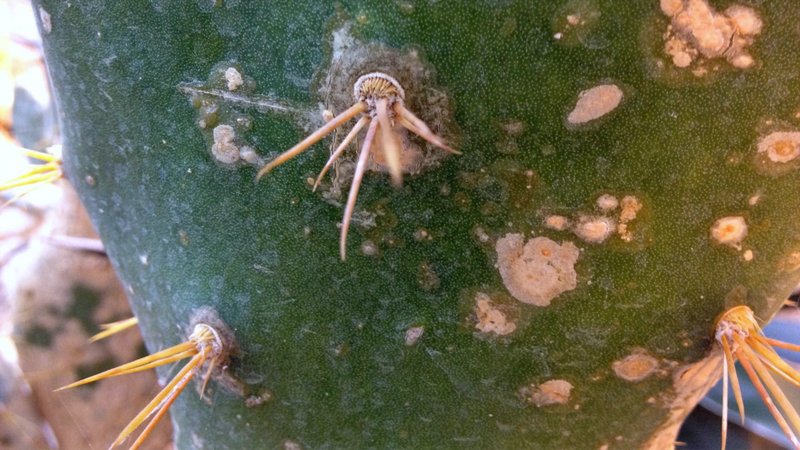
Characteristic features of the prickly pear cactus
The prickly pears are characterized by their flat, oval segments that resemble Mickey Mouse ears.
In addition to the ordinary cactus spines, the prickly pear also has very small, fine spines with barbs that attach into one’s skin and are very difficult to remove.
Prickly pear cactus has spread uncontrollably, for example in Australia
The prickly pear is native to America but is strongly invasive when introduced to arid regions of other parts of the world. A famous example comes from Australia.
In the early 1900s, several different species of prickly pear were introduced to cultivate cochineal scale insects (Dactylopius coccus), a kind of aphid that lives on prickly pear. The cochineal produces carminic acid, a red dye that was highly prized for dying textiles and foods before the advent of artificial dyes.
The experiment was a massive failure. The cochineal population failed to thrive in Australia while the prickly pear population exploded and got out of control.
By the 1920s, prickly pears covered an area of 260 000 km^2 in Australia or an area six times the size of Denmark. The problem was first brought under control by the introduction of the South American cactus moth (Cactoblastis cactorum), whose larva eat the prickly pear.
Fact box:
- Greenhouse location: Dessert house
- Danish name: Opret figenkaktus
- Latin name: Opuntia dillenii
- Family: Cactus family / Cactaceae
- Natural habitat: Southamerika and southern USA