Papaya

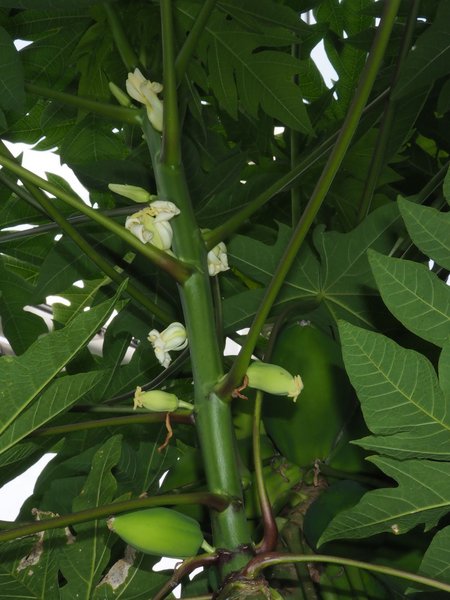
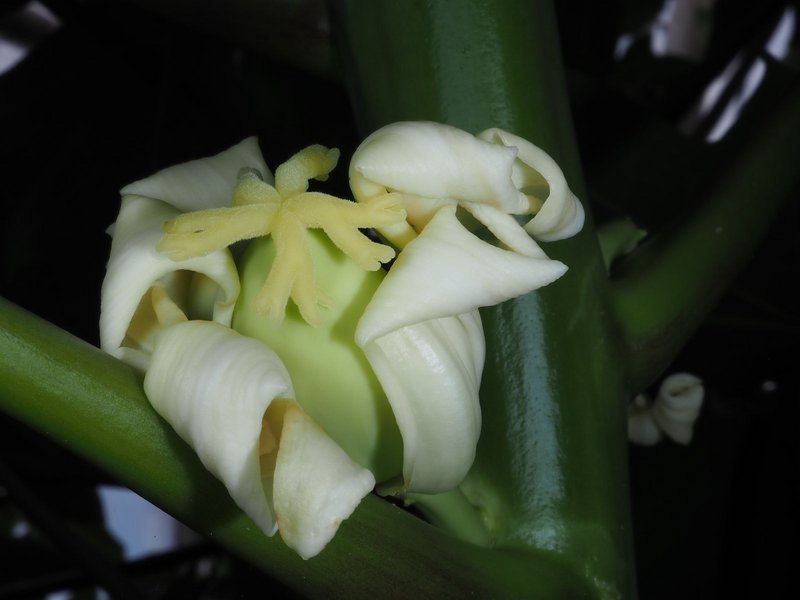
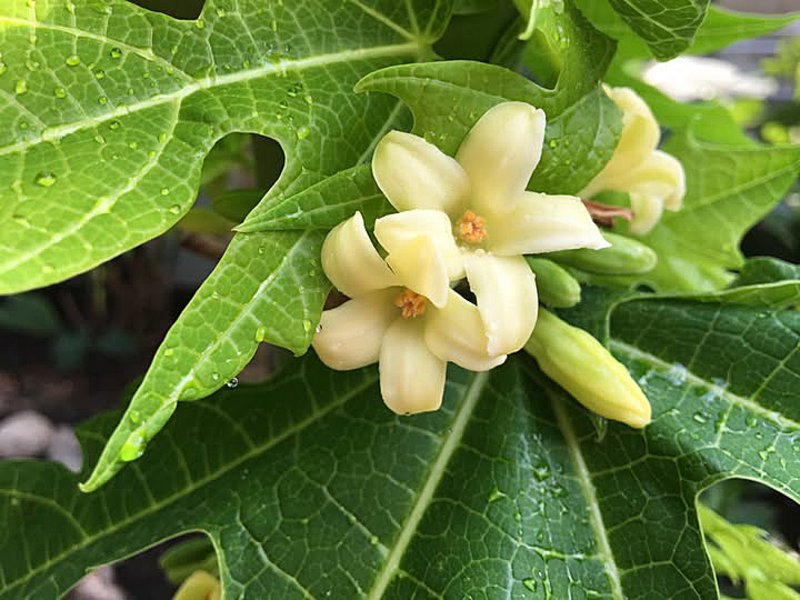
Papaya (Carica papaya) is native to the tropical regions of Mexico and Central America. The plant is often dioecious, meaning that male and female flowers are borne on separate plants. Female plants produce the familiar fruits, while male plants produce only flowers. Therefore, both male and female plants are usually needed for pollination and fruit production. The difference can be seen in the flowers.
The fruits develop directly on the stem just below the crown of leaves, giving the plant its characteristic appearance. Papaya grows rapidly and can begin producing fruit within its first year of life.
Unripe papaya fruits contain the enzyme papain, which, like the stomach enzyme pepsin, is able to break down proteins. For this reason, papaya is used to tenderize meat and, in some cases, to aid digestion.
Facts:
Greenhouse location: The Tropical House
Common name: Papaya
Scientific name: Carica papaya
Family: Papaya family / Caricaceae
Native range: Tropical regions of southern Mexico and Central America