African locust bean

© Egon Krogagaard
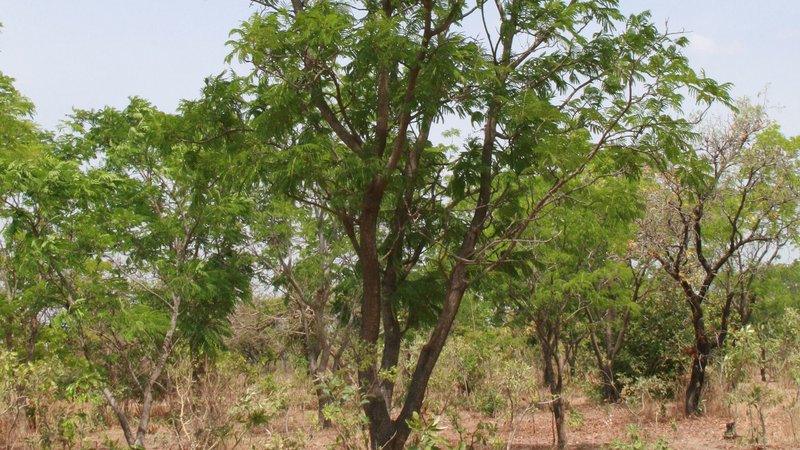
African locust bean (Parkia biglobosa) is often called a wonder tree because almost every part of the tree can be used. Native to West and Central Africa, it is one of the region’s most important useful trees. Its fruits are long pods containing protein-rich seeds, which are an important food source in the Sahel region south of the Sahara.
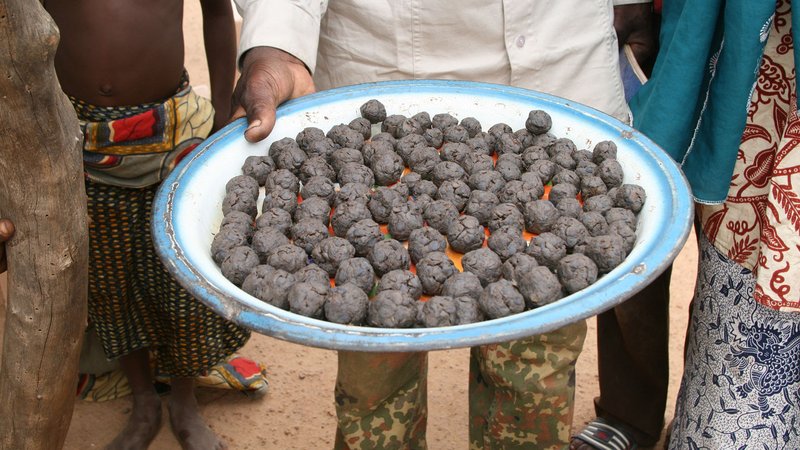
The seeds are boiled and fermented into small brown balls or lumps known as sumbala. They are used as a seasoning and flavour enhancer in many West African dishes.
The sweet fruit pulp is eaten, and the leaves are cooked and used as a vegetable. The bark, roots, and leaves are used in traditional medicine.
The tree lives in symbiosis with nitrogen-fixing bacteria in its root nodules, helping to improve soil fertility.
For this reason, African locust bean is included in several development projects aimed at improving food security and combating malnutrition in West Africa. A research project at Aarhus University is investigating how climate, soil, and growing conditions affect fruit yields in parkia trees in Ghana.
Fakta:
- Greenhouse location: The tropical house
- Danish name: Parkia
- Latin name: Parkia biglobosa
- Family: Pea family / Fabaceae
- Natural habitat: West and Central Africa