THE BIRTH OF A PLACENTA
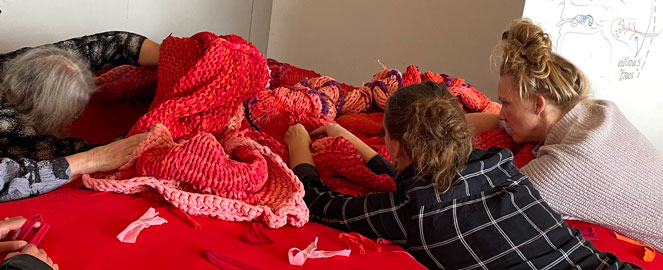
The world’s largest knitted placenta is one of the central artworks in the exhibition The Overlooked Body.
The sculpture is created by Australian artist Rebecca Vandyk-Hamilton in collaboration with knitting and crochet enthusiasts from both Australia and Aarhus. It is made from yarn produced from more than 900 recycled T-shirts and measures approximately three metres in diameter.
A collective artwork
The placenta was transported from Australia to Aarhus in several large suitcases and assembled piece by piece.
To complete the work, the museum invited the public to participate in a co-creation event, where visitors helped knit and crochet the sculpture together.
This process turned the artwork into a shared, collective creation — bringing together craft, conversation and reflection.
From overlooked organ to monumental installation
The placenta is an essential but often overlooked organ.
It exists only temporarily during pregnancy and plays a crucial role in sustaining life — yet it remains relatively understudied and underrepresented in medical research.
By scaling the placenta up into a large, tactile installation, the artwork invites visitors to reconsider its significance.
Part of The Overlooked Body
The knitted placenta serves as a striking entry point to the exhibition, which explores how bodies — particularly female bodies — have historically been overlooked in medical research.
Through collaborations between researchers, artists and participants, the exhibition examines how gender bias has influenced:
- research
- diagnosis
- treatment
The world’s largest knitted placenta is a large-scale, co-created artwork made from recycled textiles. Created by artist Rebecca Vandyk-Hamilton together with participants from Australia and Aarhus, it highlights an often overlooked organ and invites reflection on the role of the body in medical research.