HOW DID MY UTERUS BECOME A MUSEUM EXHIBIT?
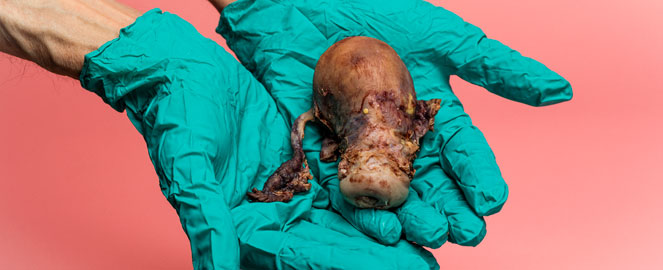
First it was a placenta. Now it's a uterus.
(All quotes are translated from Danish)
Science Museerne uses human organs as part of its exhibitions. Among other things, a real placenta and a testicle were included in the first phase of The Overlooked Body. Now, a uterus is part of the exhibition's second phase, The Overlooked Body – Blood, Breasts and Inequality.
But this time, it is not only the organ itself that the museum has received.
Behind the uterus lies the story of a long journey with endometriosis, pain and the experience of not being taken seriously.
The Story Behind the Uterus
As part of the museum's collecting process, museum curator Morten Arnika Skydsgaard interviewed Karen-Maria Stubager about her donation of her uterus to the museum.
"But how did my uterus suddenly become a public engagement project?" she asks rhetorically, opening the door to a story that reaches far beyond the organ itself.
The donation of her uterus also tells the story of a long journey with endometriosis, adenomyosis, fibroids, cysts and pain, as well as the experience of repeatedly being told that nothing was wrong.
“There's nothing wrong. Go home. There was something about that that made me think: there is something wrong. I don't want to go home. Or rather, you don't get to decide that anymore. I'm done just accepting that.”
It was only when she was finally offered a hysterectomy that the situation changed.
“It has been an enormous relief. Just knowing that I no longer have to go through hell every 23 days.”
From Personal Experience to a Museum Exhibit
Becoming part of The Overlooked Body was not the plan when Karen-Maria Stubager had her uterus removed.
"The fact that it ended up in a museum was really just a coincidence."
Before the operation, Karen-Maria Stubager had looked into whether it would be possible to take her uterus home afterwards. But when she discovered that Steno Museum was looking for a uterus for the new exhibition, she saw it as a better solution.
“It was incredibly fortunate that you were looking for one.”
Raising Awareness of Endometriosis
For Karen-Maria Stubager, the donation is not only about her own health journey, but also about contributing to greater awareness of endometriosis and women's health.
"I have two daughters who are genetically predisposed to endometriosis. I want people to know more about the disease by the time they become teenagers. I'm doing what I can."
She hopes that her story can help create greater awareness and understanding — both among people living with the disease and those researching it.
At the same time, she sees the donation as an opportunity to turn something deeply personal into something that can benefit others.
“I feel like it was written in the stars. It's just perfect. Perfect timing. It's a win-win. That's how I see it. You can use it for something meaningful. It means a great deal to me, and it gives something to others too.”