WOMEN'S HEARTS - DIFFERENCES AND FIRST AID
Credit: Kasper Hornbæk and Science Museerne, Aarhus Universitet
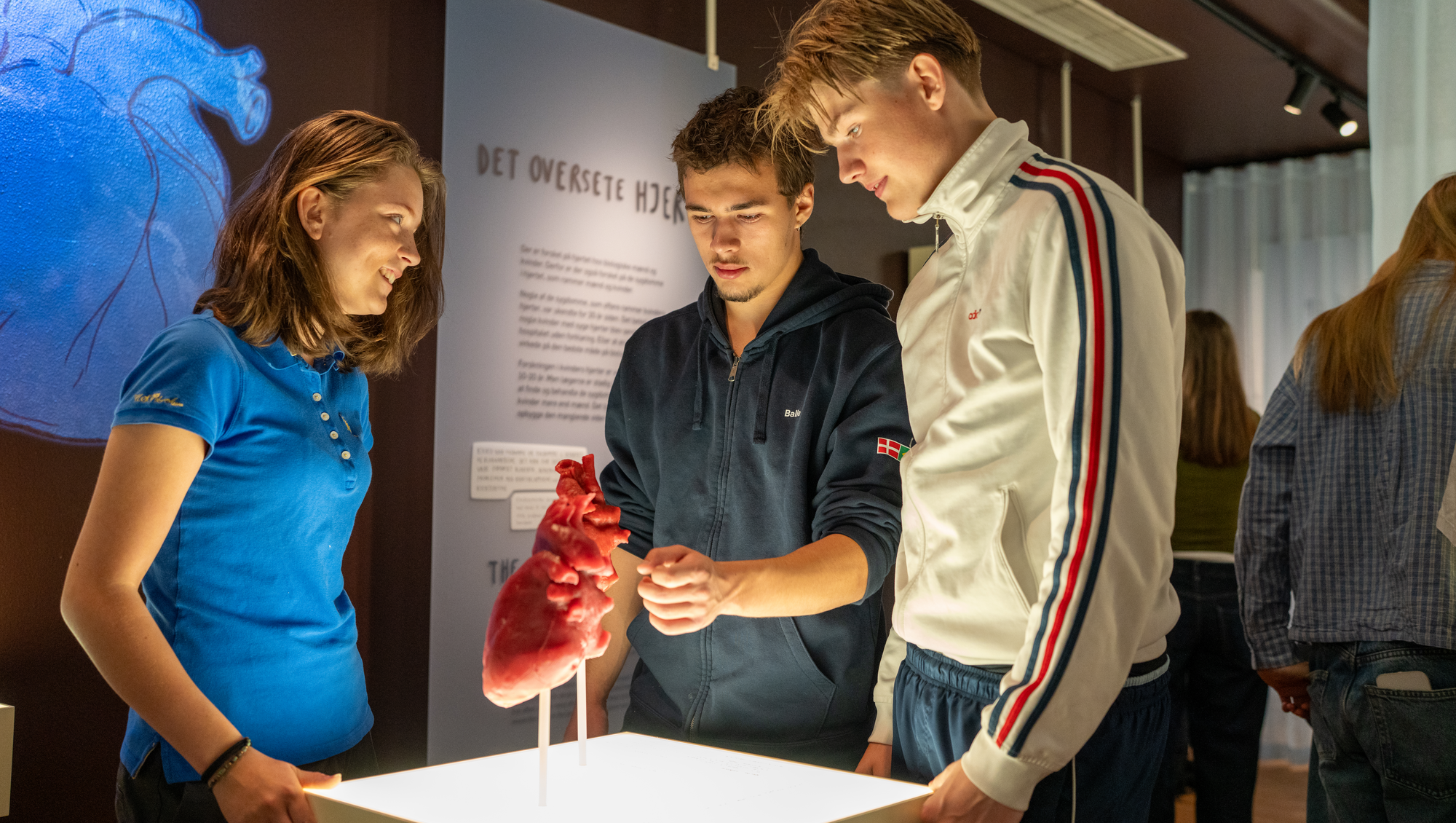
In The Overlooked Body – Blood, Breasts and Inequality, you can explore how the biological female body has been overlooked in medical research – and the consequences this has had. Among other things, you can learn how research into women's hearts has evolved and why differences in both treatment and first aid still exist.
The overlooked heart
There are differences between the hearts of biological men and biological women, and therefore there are also differences in the heart conditions that affect them. In the past, this has meant that some women were sent home from hospital with undiagnosed heart disease or received treatments that were not as effective as they could have been. Research into women's hearts has expanded over the past 10–20 years, but it takes time to build up the knowledge.
Recent research shows that pregnancy, premature birth and breast cancer treatment can affect heart health. However, researchers still do not fully understand why.
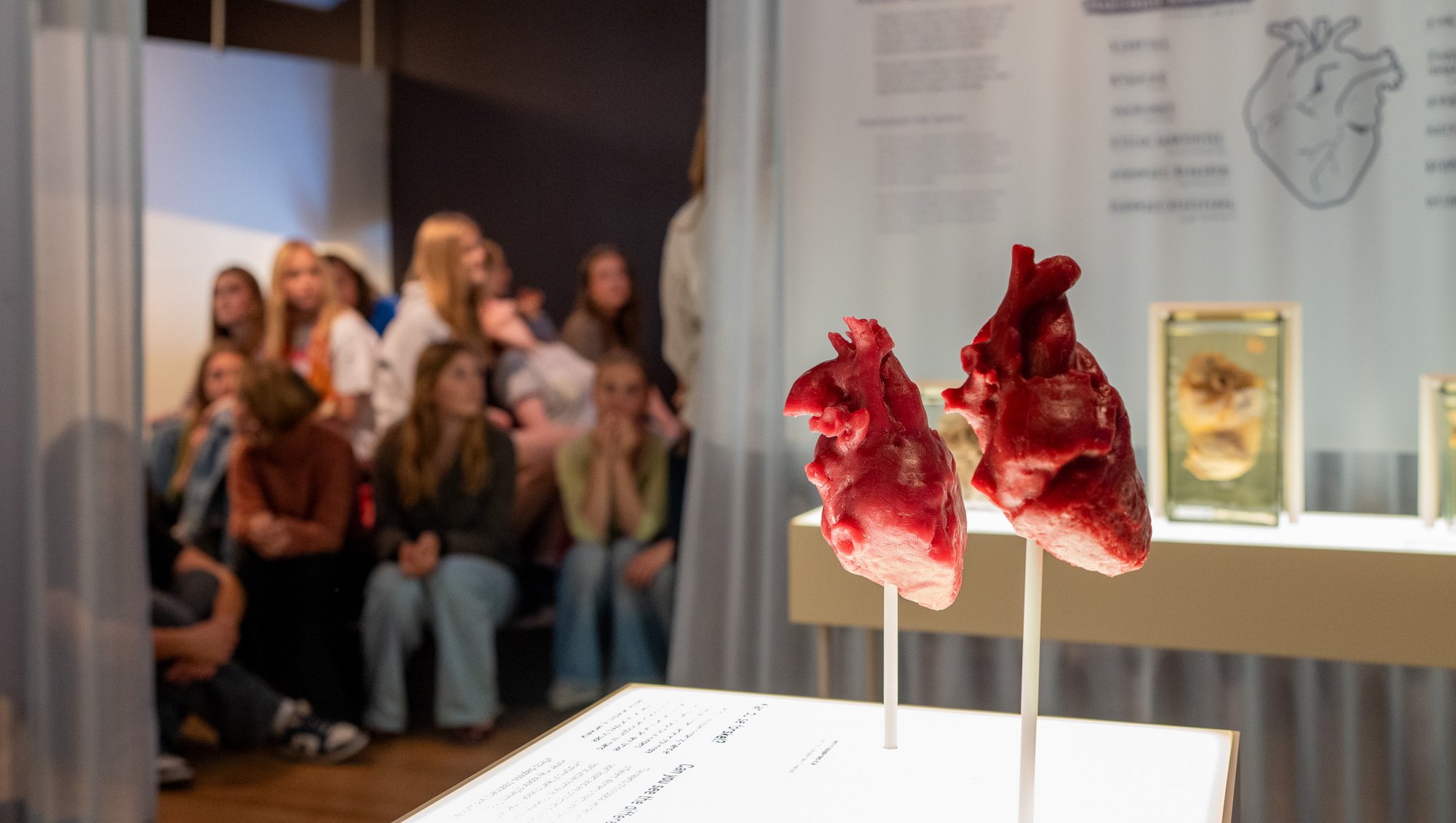
For the exhibition, two exact replicas of a male heart and a female heart have been cast with the help of Tabita Krogstrup Gallacher and Kristian Brogaard Krogh from the Simulation Centre at Aarhus University Hospital. The moulds were created from scans of the hearts of two living individuals.
First Aid for Women – Every Second Counts
In The Overlooked Body, you can see a female CPR training manikin. The purpose of female CPR training manikins is to make first aid training more realistic and to reduce hesitation and uncertainty about where to place your hands on the female body – and how hard to press.

The topic was also highlighted in spring 2026, when Science Museerne, Røde Kors Aarhus and Dansk Kvindesamfund hosted an event on women's hearts and first aid.
Michael Bøgh Nielsen, Head of First Aid Activities at Røde Kors Aarhus, points out that the lack of practical experience can have serious consequences when every second counts:
“It has been many years since the first participants began asking why we did not have female manikins in our training, but they were not available at the time,” he says. “We bought female manikins when they became available and have used them in our training ever since December 2024. We can see that many people become a little uncertain and feel uncomfortable when they see that the manikin has breasts. It is important to us to make our training as realistic as possible. Modesty should not stand in the way of saving lives.” (Translated from Danish)